

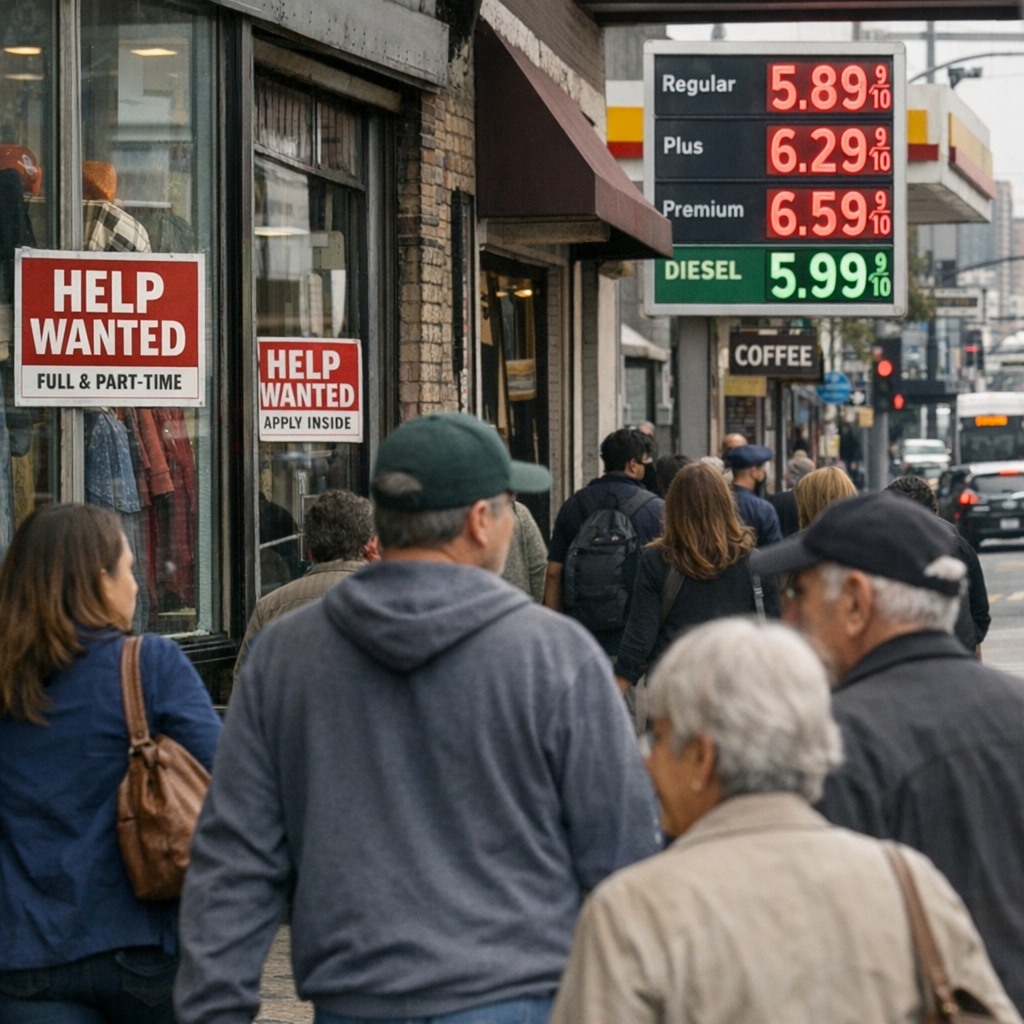
The U.S. economy is currently exhibiting a mix of resilience and challenges. In May, employers added 172,000 jobs, maintaining the unemployment rate at a low 4.3%. This growth spans various sectors, including local government, hospitality, and healthcare, indicating a broad-based recovery.
However, inflation remains a pressing concern. The cost-of-living crisis has led to a 70% disapproval rating of President Donald Trump’s handling of the issue, surpassing the 63% disapproval at the end of former President Joe Biden’s term. Gasoline prices have notably risen, averaging over $4.50 per gallon nationally, with some states exceeding $5. This surge is partly attributed to recent military actions in the Middle East, which have disrupted oil supplies.
Despite the strong job market, wage growth has been modest, and long-term unemployment persists. Additionally, public sentiment reflects economic dissatisfaction, with many Americans expressing concerns about rising prices and their financial well-being.
As the nation approaches the midterm elections, the economy remains a pivotal issue. The interplay between job growth, inflation, and public perception will likely influence political dynamics in the coming months.